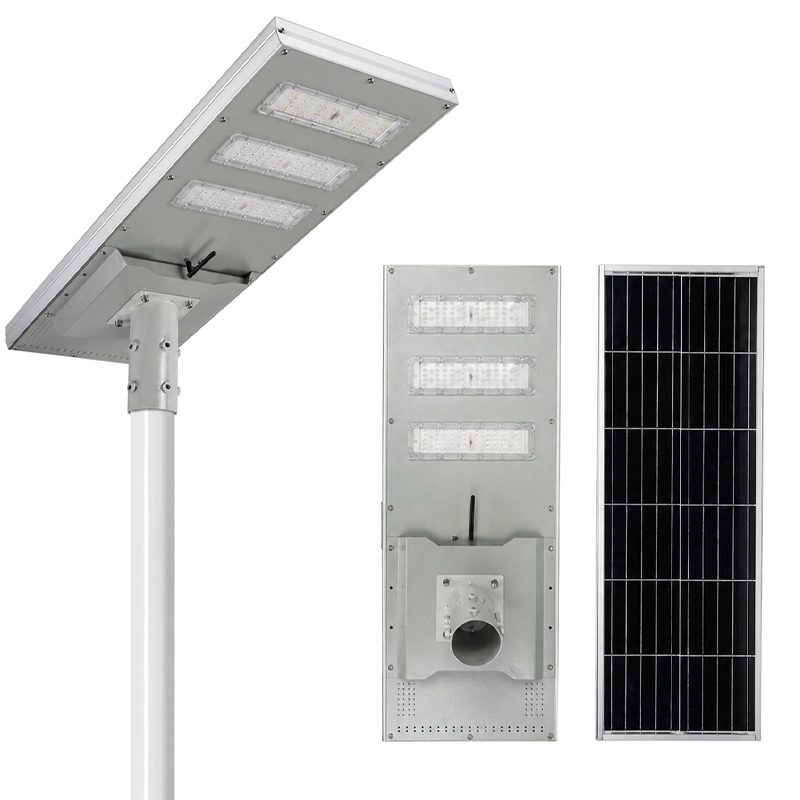
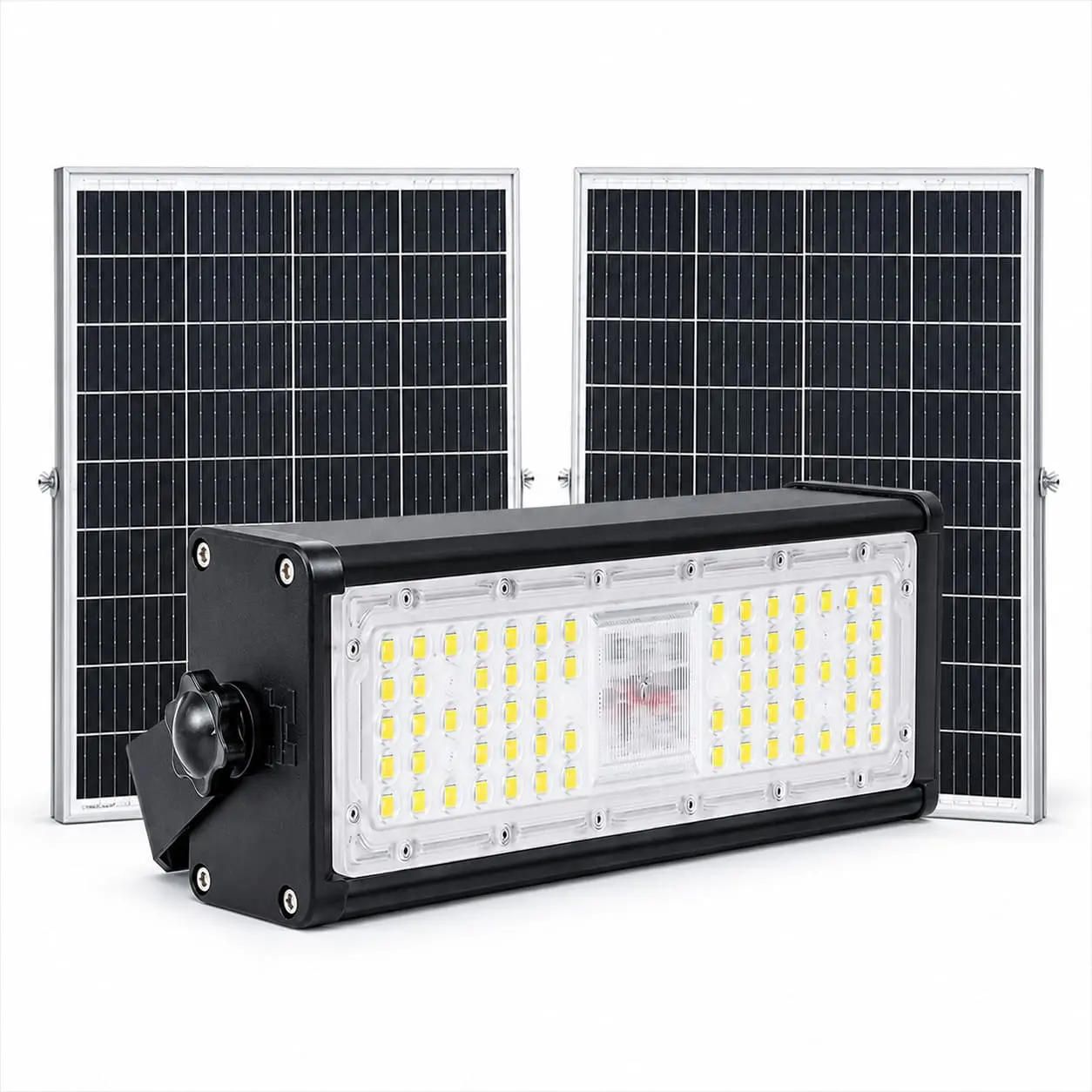
All-in-One vs Split Solar Street Light: Which One Fits Your Project?
November 20, 2026
 Werise Engineering Team
A solar street light’s wattage is the lamp’s rated power. It does not, on its own, tell a buyer how bright a road will be or how long the light will stay on. The same wattage can give very different results depending on the solar panel, the battery, the controller, the mounting height and the dimming schedule. Buyers who choose by wattage alone are the buyers who end up with a dark road or a light that dies before morning.
That is why this guide works through the whole system, then uses Werise models as worked examples — each figure below is taken from that model’s own product page, not from a generic wattage table.
50W — HC-WT2-A50W (garden / small-area example). 50W, 180–210 lm/W, maximum 9,000–10,500 lm at full power. Brightness is multi-mode and adjustable to customer requirements — 1,000 / 1,600 / 1,900 lm are example dimmed settings, not a fixed three-level limit — and actual brightness varies with battery charge. Use it to show how a small-wattage light can still be the right answer when the area is small and the dimming schedule is right — and the wrong answer for a wide road.
150W — HC-CZSL-39 (road example). 150W, 27,000–30,000 lm, CREE 3030 LEDs, IP65, 6–8 m mounting height. Product page describes it for roads, parks, rural communities, public areas and remote projects. This is the guide’s main road example: same logic as the 50W case, scaled up — more lumens, higher pole, wider coverage.
200W — HC-WT3-A200W (project example, Shenzhen Airport parking lot). 200W rated per head, configured operating power 50W, 6 × 100W solar panels per pole, 12 m poles, October 2026 project. Use it to make the guide’s central point concrete: rated watts and operating watts are not the same number, and the panel array and pole height are part of the answer.
The decision guide is the three worked examples above, plus this checklist:
For a broader selection framework, see the municipal and rural road solar street light guide.
Q: How many watts do I need for a solar street light?
A: It depends on road width, pole height, required brightness and how many hours the light must run. Wattage alone is not enough — check lumens, panel and battery, mounting height and the dimming schedule. Send your road width and pole height and Werise will recommend a model.
Q: Is a higher-wattage solar street light always brighter?
A: Not necessarily. Brightness is lumens, and lumens = watts × efficacy (lm/W). A 50W light at 180–210 lm/W (HC-WT2-A50W, maximum 9,000–10,500 lm) can out-perform a higher-wattage light with lower efficacy. Check the model’s own figures.
Q: How long will a solar street light stay on each night?
A: Werise solar lights run 10–12 hours per night in time-segmented dimming mode, not at 100% brightness all night, with up to 3 rainy days of backup in dimmed mode. The exact schedule is configured per project — confirm for the exact model before ordering.
Send your road width, pole height and hours per night — we will recommend the model and a lighting layout.