AI IoT Solar Street Lights with GPS Tracking for Remote Projects
October 31, 2026
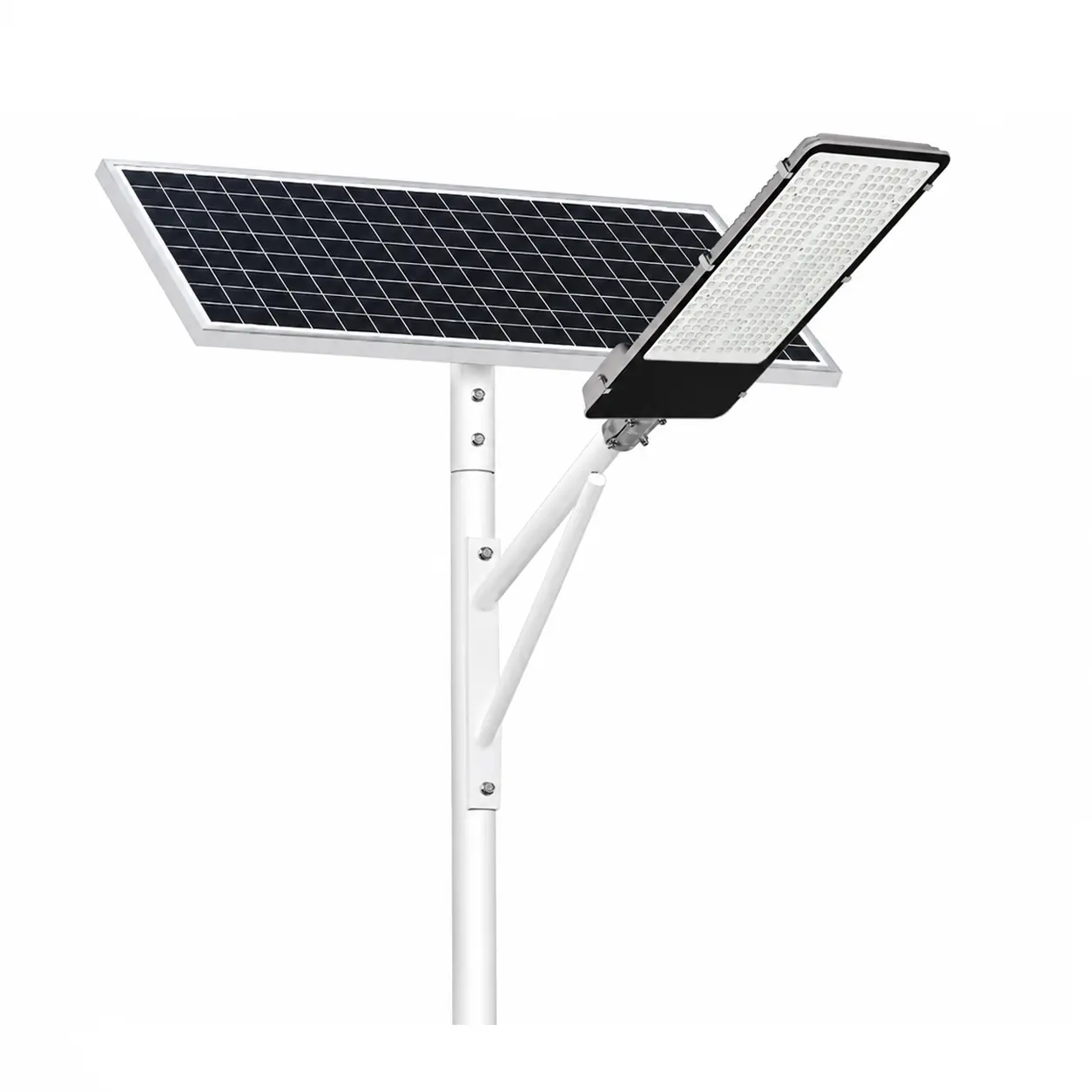
AI IoT solar street lights combine solar power with connected monitoring and intelligent lighting control. Alongside the solar panel, battery, and LED fixture, a compatible controller connects each light to a management platform through a supported network.
For operators managing roads, industrial parks, or remote sites, this means easier access to operating information and fewer trips for routine adjustments. This guide explains how the system works, its main functions, and what to consider when planning a project.
This guide explains the system at project level. It helps a buyer decide whether a connected solar-lighting approach is appropriate, what information to collect before comparing models, and which claims still require product-specific confirmation. Detailed sensor, controller, camera, and cloud-platform architecture belongs in the companion article, Inside AI IoT Solar Street Lights: Sensors, Controllers, Cameras, and IoT Control System.

A standalone solar light can illuminate a roads, gardens, schools, industrial parks, or other outdoor area without a wired power connection. After installation, however, the operator may have limited visibility into battery condition, generation, LED operation, or unexpected faults. When the site is close and the number of lamps is small, manual inspection may be acceptable. When the lamps are dispersed across a municipality, rural area, industrial estate, or remote site, the operating problem changes.
The lighting team may need to answer practical questions without sending a technician to every pole:
The Werise FAQ states that AI management system can monitor battery status, power generation, and LED working status. The AI IoT remote-monitoring service describes the management layer used to review status and supported commands. It also states that brightness, color temperature, GPS positioning, and on/off status can be controlled remotely, This allows for proactive fault diagnosis, 24/7 online trouble-shooting and resolution, and alerts for site-based maintenance.
The clearest way to compare the two is to separate the lighting function from the management function.
| Project layer | Standalone solar light | Connected AI IoT solar-light approach |
| Energy | Solar panel and battery supply the fixture | Solar panel and battery remain the energy base |
| Local lighting | Light turns on according to its local control logic | Local lighting can be combined with connected control logic |
| Visibility | Inspection is often local and periodic | Status can be viewed through a Web or mobile interface when the project is configured for it |
| Adjustment | Settings may require local access | Brightness, color temperature, on/off, and selected functions may be adjusted remotely |
| Maintenance | Faults may be discovered during inspection or after a complaint | Monitoring and alerts can support earlier investigation and planned maintenance |
This does not mean that every connected lamp has the same functions. A product record, project design, network path, user permission model, and selected accessories determine what is actually available. The safe conclusion is that AI IoT adds a management layer around the lighting asset. It should not be reduced to a timer, a remote-control handset, or a marketing label.

| Remote Lighting Control | Control individual lights or groups remotely, adjust brightness, and set lighting schedules to match your project’s operating needs. |
| Battery and Solar Monitoring | Monitor battery status and solar power generation data remotely to track charging performance and energy use. |
| Adjustable Color Temperature | Adjust color temperature remotely or let the system adapt it automatically to changing weather conditions. |
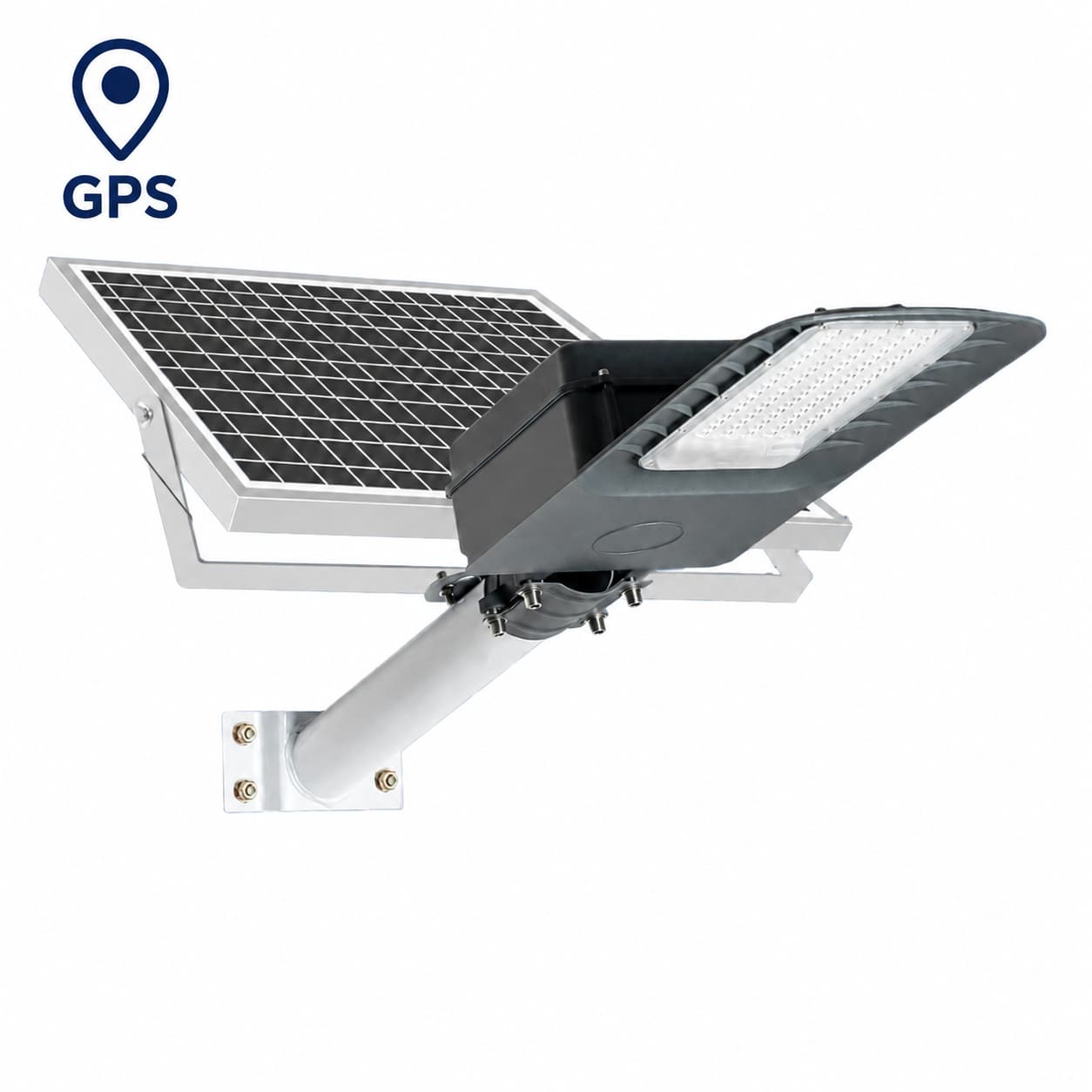
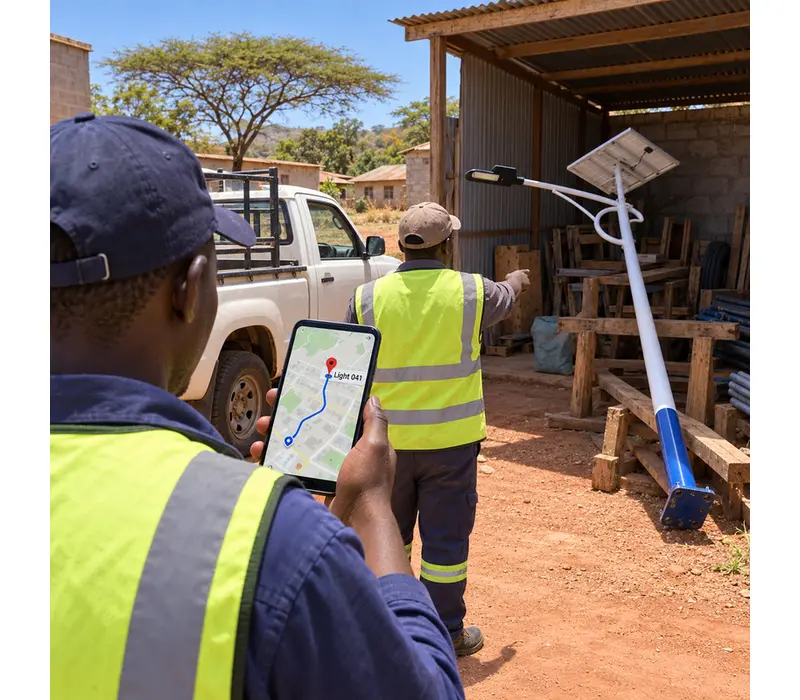
| GPS Tracking and Asset Management | View light locations, investigate unusual movement, and manage lighting assets remotely through the connected platform. |
| Fault Alerts | Receive fault alerts that help maintenance teams identify abnormal conditions and investigate issues promptly. |
| Optional Functions | Automatic solar panel cleaning, heating, and other optional functions are available depending on the selected configuration. |
Remote monitoring is most useful when the cost of not knowing is high. Consider it when one or more of the following conditions apply:
Long travel distances, mountains, rural roads, desert conditions, or restricted industrial sites make routine inspection expensive. A shared status view can help the team decide which site needs attention first. It does not remove the need for field verification; it helps prioritize it.
Roads, parks, campuses, and industrial facilities may have different traffic patterns across seasons or events. If the selected product and project network support it, remote brightness, color-temperature, or on/off control can make a change easier to test and manage. The project brief should state who is authorized to change settings and what operating schedule is acceptable.
For public or safety-related lighting, a dark lamp can create complaints, inspection failures, or a security concern. A warning workflow can help an operator review battery, generation, LED, or controller signals before dispatching a technician. The team should define the warning threshold, escalation owner, and evidence required to close an alert.
When a project includes many lighting points, the buyer may need asset identification, location information, status records, and maintenance history. Werise’s FAQ describes Web and mobile APP management and GPS plus Beidou positioning. These points should be confirmed for the exact solution, region, and deployment plan before they are included in a tender or acceptance requirement.

Avoid starting with wattage alone. Prepare a short project data sheet covering:
One Werise HC-JDSL-02 solar street-light product record lists an AI IoT MPPT controller with PC/APP, light, and remote control; 3000K–6000K AI-adjustable color temperature; a LiFePO4 external battery box; pole or wall mounting; and a 4–6 m mounting height. Those figures are useful as a model-specific example, not as a specification for every AI IoT solar street light.
The following statements should never be copied from a general concept page into a procurement document without checking the exact model and project:
The customer material describes scalable integration with security cameras, early-warning broadcast, and meteorological monitoring as an integration direction. The comprehensive outdoor-lighting solutions page provides the appropriate project context, but this should still be treated as a verification item—not evidence that every lamp includes a camera or that every interface is ready without engineering work.

Start with the operating problem: is the project mainly choosing a solar fixture, or is it managing a distributed lighting portfolio? If the project is small, easy to access, and operationally stable, a standalone design may be sufficient. If the project needs shared status, remote adjustment, early warning, or a structured maintenance workflow, evaluate a connected architecture.
Then ask for an evidence pack tied to the exact model. It should show the controller and monitoring functions, installation assumptions, network conditions, user workflow, and acceptance method. Finally, separate confirmed product capabilities from functions that need configuration or integration. This keeps the article, tender, and technical discussion accurate.
For a project-fit assessment, share the site conditions, lighting objective, operating pattern, connectivity context, required controls, and monitoring expectations with the Werise team through the Werise contact page. The right AI IoT solar-light solution is the one whose evidence, operating workflow, and project conditions align—not simply the one with the longest feature list.