Solar Street Light Installation: A Practical Guide for AI IoT Projects
-
Werise Engineering Team
- Ноябрь 19, 2026
Section 1. What installation involves — and what it does not
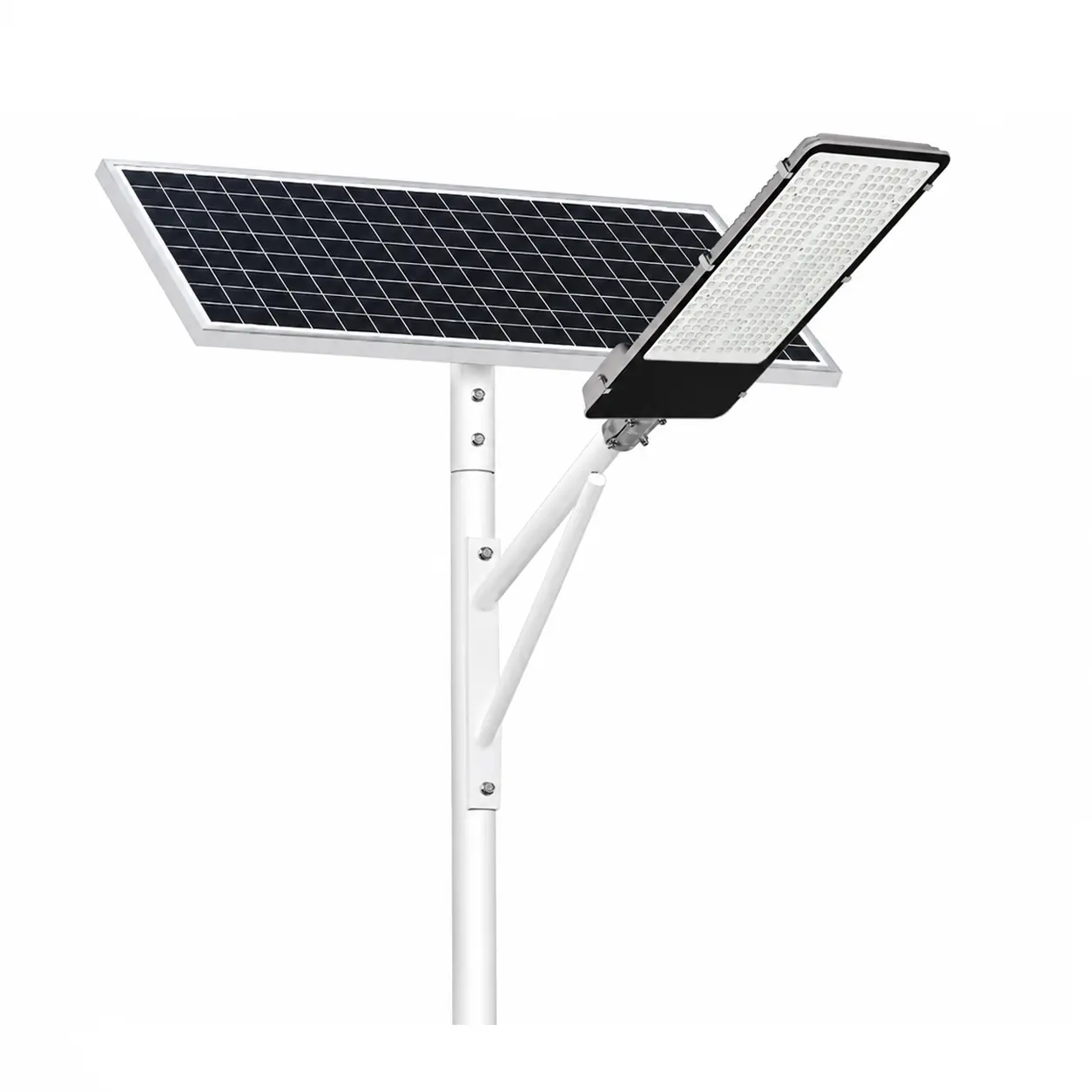
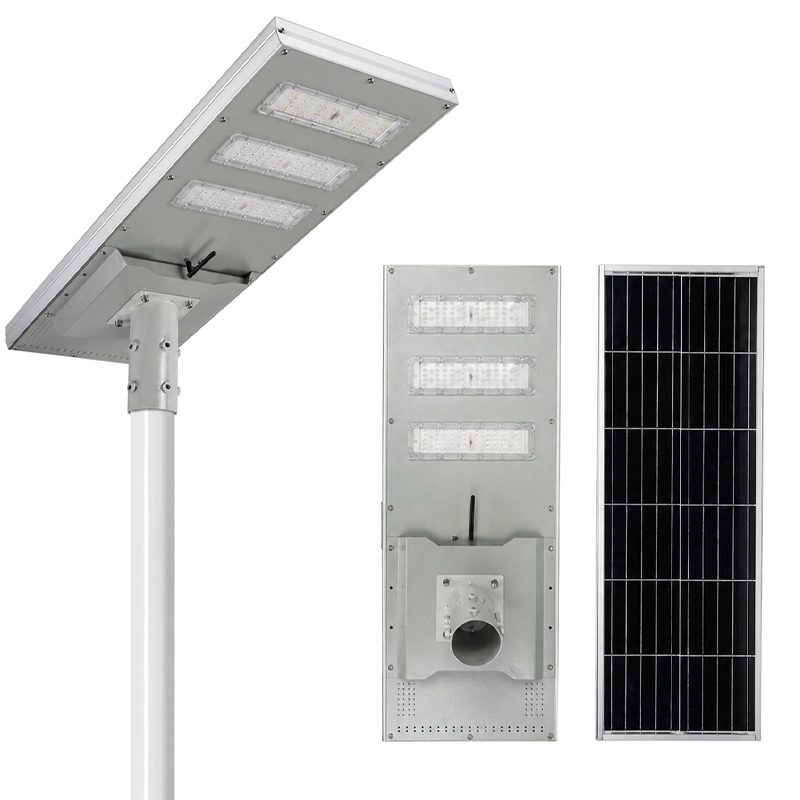
A solar street light is an off-grid system: light head, solar panel, battery box, controller and pole. There is no power cable to run to the grid — the Shenzhen Airport case states the project required “solar-powered parking lot lighting without a grid power connection”. There is still a foundation to build for each pole, and the foundation specification depends on pole height and local conditions — confirm before ordering. The AI IoT part is the controller and the platform. The models used in this guide carry an AI IoT MPPT controller (PC & App, light & remote control), and the installation is not finished until the light is visible and controllable on that platform — not when the pole is up.
Section 2. Before anything is installed: the site survey
The survey decides the configuration. The HC-CZSL-39-150W product page FAQ puts it plainly: Werise normally evaluates the project location, road width, pole height, pole spacing, daily operating hours, required illumination level and local solar conditions, then recommends wattage, optics, solar panel and battery configuration. Send those inputs before the configuration is fixed — not after the poles are ordered.
Three survey items buyers most often skip:
- Shading on the panel — the panel must stay uncovered and unshaded. A cover on the panel greatly reduces charging efficiency (stated on the HC-CZSL-39 product pages). Check trees, buildings and the pole’s own head for shading before fixing panel positions.
- Hours per night and rainy-day backup — Werise solar lights run 10–12 hours per night in time-segmented dimming mode, not at 100% brightness all night, with up to 3 rainy days of backup in dimmed mode (factory-confirmed 2026-11-14). Settle the hours and the backup days in the survey, because they decide the panel and battery size.
- What to send Werise — country/city, road or site dimensions, pole height and spacing, required operating hours, quantity and any special requirements (HC-CZSL-39 product-page FAQ). Drawings, site photos or basic project information work if full technical data is not available yet.
Section 3. Poles and mounting heights
Mounting height is set per project, from the model’s own range:
- HC-CZSL-39 150W: 6–8 m mounting height (product page).
- HC-JDSL-02: 8–13 m mounting height by power model (product page spec table: 400W 8–9 m, 500W 9–10 m, 600W 10–11 m, 700W 11–12 m, 800W 12–13 m).
- HC-CZSL-39-100W: 4–6 m mounting height, pole or wall mounting.
Project poles run taller: both verified cases in this guide use 12 m poles — Guangxi industrial access road and Shenzhen Airport parking lot. Do NOT publish a generic pole-height-to-road-width rule, and do not copy a spacing figure from one model to another. The HC-ZY-01 product page shows a 6 m mounting height with 12 m pole spacing only as a reference configuration for that tested luminaire — it is not a general rule, and this guide does not repeat it as one. Spacing is set by a lighting calculation for the project.
Section 4. Panels and battery boxes (split systems)
In a split system the head, the panel and the battery box are separate components, so each is mounted and checked on its own. Panel and battery are matched per model — the pairs below are from each model’s own product page:
- HC-WT2-A50W: 20W 18V mono panel + 15Ah 3.2V LiFePO4 external battery box.
- HC-CZSL-39-100W: 60W 18V mono panel + 60Ah 3.2V LiFePO4 external battery box.
- HC-CZSL-39-150W: 70W 18V mono panel + 75Ah 3.2V LiFePO4 external battery box.
- HC-JDSL-02: configurable — panel 100–200W 18V; battery 3.2V, 6.4V, 12.8V or 25.6V LiFePO4, capacity matched to lighting power, operating hours and local sunlight.
The battery box is external on these models. Check its mounting and that it is protected from damage on site. All four models above are IP65 on their product pages. Do not swap a panel or battery between models — the pair is part of the configuration.
Section 5. Controller and app setup
The AI IoT MPPT controller (PC & App, light & remote control) is stated on the product pages of HC-CZSL-39, HC-CZSL-39-100W, HC-JDSL-02 and HC-WT2-A50W. Setup covers on/off, the time-segmented dimming schedule (10–12 hours per night, dimmed — factory-confirmed) and colour temperature, which is AI-adjustable per model: 3000K–6000K on HC-JDSL-02, HC-CZSL-39-100W and HC-WT2-A50W; 2300K–6000K on HC-CZSL-39-150W.
Two limits to keep straight:
- Tuya models are a different control path: Tuya connects over a 4G built-in chip (factory-confirmed 2026-11-14). Do not describe a Tuya model as AI IoT, or an AI IoT model as Tuya.
- Sensors are customised per project. There are no fixed detection distance, angle or delay figures — if the project needs sensors, confirm the configuration before ordering.
Section 6. Commissioning and the remote-monitoring check
Every light undergoes aging testing before shipment (HC-JDSL-02 product page). On site, commissioning is a platform check, not just a look at the pole. The definition post states the AI management system can monitor battery status, power generation and LED working status — so check all three for every light, plus:
- batch on/off, dimming and colour-temperature adjustment work from the PC/App platform;
- GPS position is recorded and the anti-theft function is active — GPS positioning and anti-theft are stated on the product pages of HC-CZSL-39, HC-JDSL-02 and HC-WT2-A50W. Do not claim GPS for a model whose page does not state it;
- the dimming schedule is running as configured, not at full power all night.
Handover checklist:
- each light visible on the platform;
- battery, generation and LED status reporting;
- dimming schedule running;
- GPS position recorded;
- remote on/off and dimming tested.
Accept handover only when the checklist passes for every light, not for a sample.
Section 7. Two real installations
Guangxi — industrial access road (HC-JDSL-02 Custom AI IoT Split). 12 m poles; two 200W LED heads per pole; two 160W monocrystalline panels and two 6.4V 100Ah batteries per pole; AI IoT MPPT controller. The case page records actual operating power of 60W per head against the 200W rating, and luminous efficacy of 198 lm/W. The lesson for buyers: rated watts and operating watts are different numbers, and the panel and battery per pole are part of the answer.
Shenzhen Airport — parking lot, 20,000 m² (HC-WT3-A200W). October 2026 project. 200W rated per head, 50W configured operating power; 6 × 100W monocrystalline panels per pole; 12 × 6.4V 60Ah battery packs per pole; 12 m poles. The case page notes the project required attention to glare and to electromagnetic compatibility for lighting and control equipment used near airport facilities. The lesson: a large site means a large battery bank per pole, and airport-adjacent projects carry checks — glare, interference — that a standard road project does not.
Section 8. What the factory supplies vs what the project provides
Confirm in the quote what is included: lights, panels, battery boxes and controller are the system. Poles, foundations and on-site labour are project items — confirm before ordering; this guide does not claim Werise supplies poles.
Two commercial facts that affect planning: there is no MOQ — even a single unit can be customized — and lead time is 10–30 days (factory-confirmed 2026-11-14). Confirm the lead time for the exact configuration before ordering, because a custom battery or pole configuration is not a stock item.
Section 9. FAQ
Q: How long does a solar street light installation take?
A: There is no fixed figure — it depends on the number of lights, pole height, site access and weather. Confirm the schedule per project before ordering.
Q: Does a solar street light need a grid connection or wiring?
A: No grid connection — the Shenzhen Airport case is solar-powered parking-lot lighting without a grid power connection. Remote monitoring runs through the cloud platform, so confirm the network path for the site before ordering.
Q: What should I check before accepting handover?
A: The checklist in section 6: each light visible on the platform; battery, generation and LED status reporting; dimming schedule running; GPS position recorded; remote on/off and dimming tested.
Q: Can the lights go on existing poles?
A: Mounting is per model — HC-CZSL-39-100W lists pole or wall mounting. Confirm the mounting method and the condition of existing poles for the exact model before ordering.
Q: What if a light stops working after installation?
A: Check the platform first — battery status, power generation and LED working status will usually show whether it is a battery, charging or LED problem. Warranty is 3 years for the whole unit and 5 years for core components. Then contact Werise with the light’s model and its platform status.
Werise Engineering Team
How to Choose Solar Street Light Wattage: 50W vs 150W vs 200W